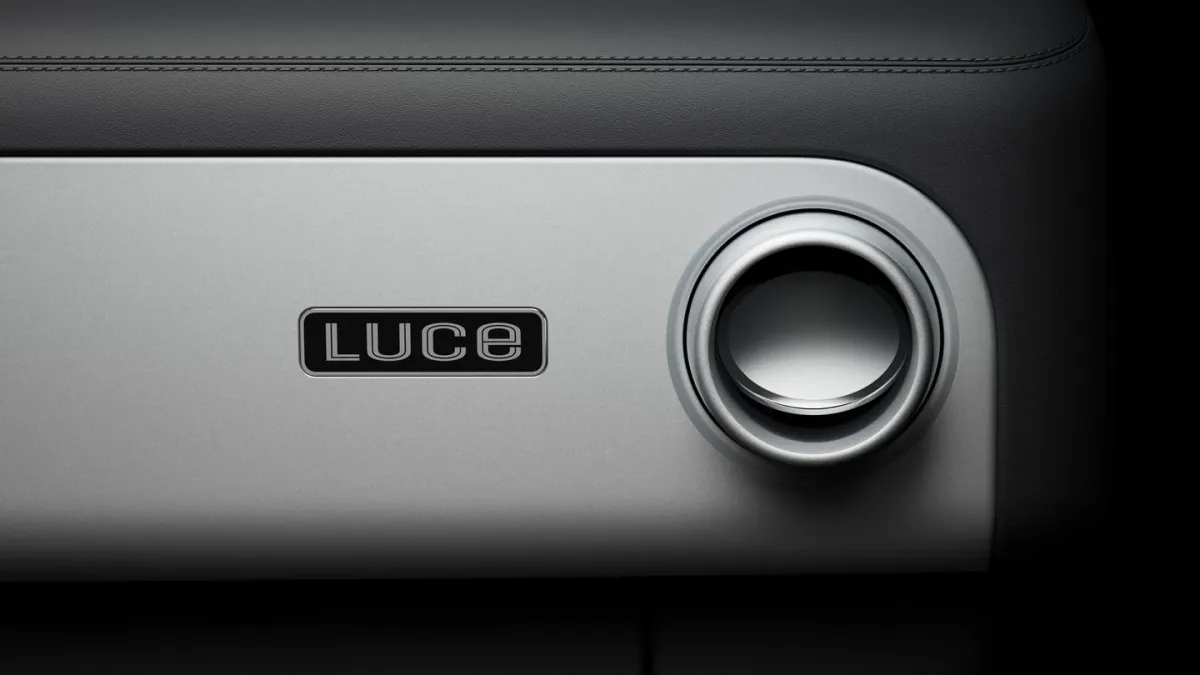
The Ferrari Luce: When Design Philosophy Meets Italian Heritage
Ferrari just unveiled the Ferrari Luce and the name alone tells you everything about the philosophy. This isn’t just about electrification. It’s about illumination. Clarity. Stripping away what doesn’t matter to reveal what does.
Sound familiar? That’s because LoveFrom, the design collective founded by Jony Ive and Marc Newson, has been collaborating with Ferrari for five years on every dimension of this car’s design. And the interior reveal yesterday in San Francisco shows exactly what happens when Apple’s minimalist design DNA collides with Ferrari’s racing heritage.
Tactile Over Touchscreen: A Refreshing Rebellion
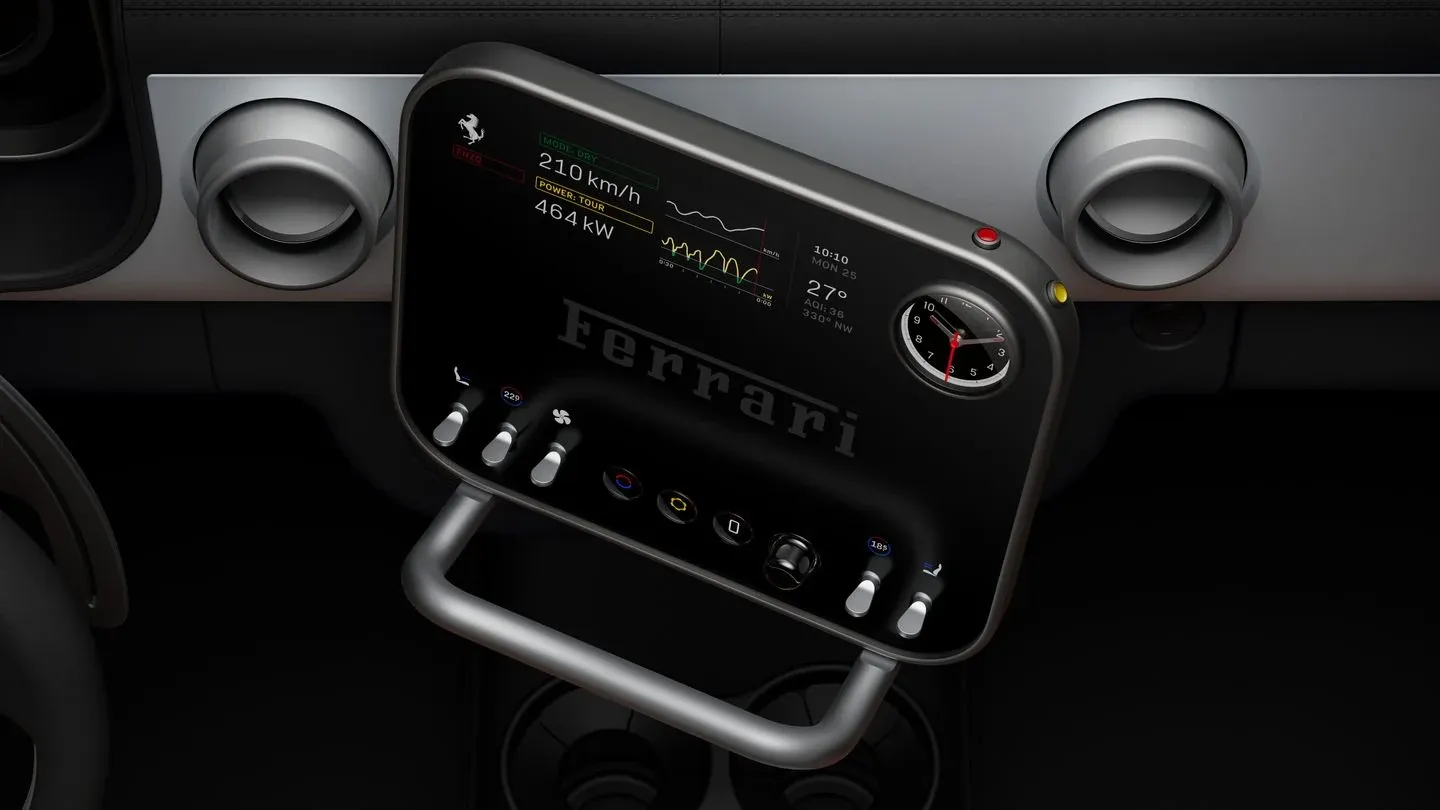
Here’s what excites me most: the Ferrari Luce defies the notion that electric cars must be dominated by massive touchscreens.
I recently rented a car with a touchscreen interface and it was genuinely frustrating trying to find basic controls like heat and music while driving. I now live in a city with great transit options, so most cars I’ve driven prior were pre-touchscreen. I miss having physical buttons you can find by feel without taking your eyes off the road.
The Luce gets this. Instead of touchscreen everything, LoveFrom prioritized physical controls like mechanical buttons, dials, toggles, and switches that are precision-engineered to be intuitive and satisfying. Every interaction has been refined to provide what they call “the most harmonious combination of mechanical and acoustic feedback.”
This is the design philosophy that made the original iPhone’s home button so satisfying to click. It’s the same obsession with tactility that made Apple’s early keyboards legendary. And now it’s in a Ferrari.
The Details That Matter
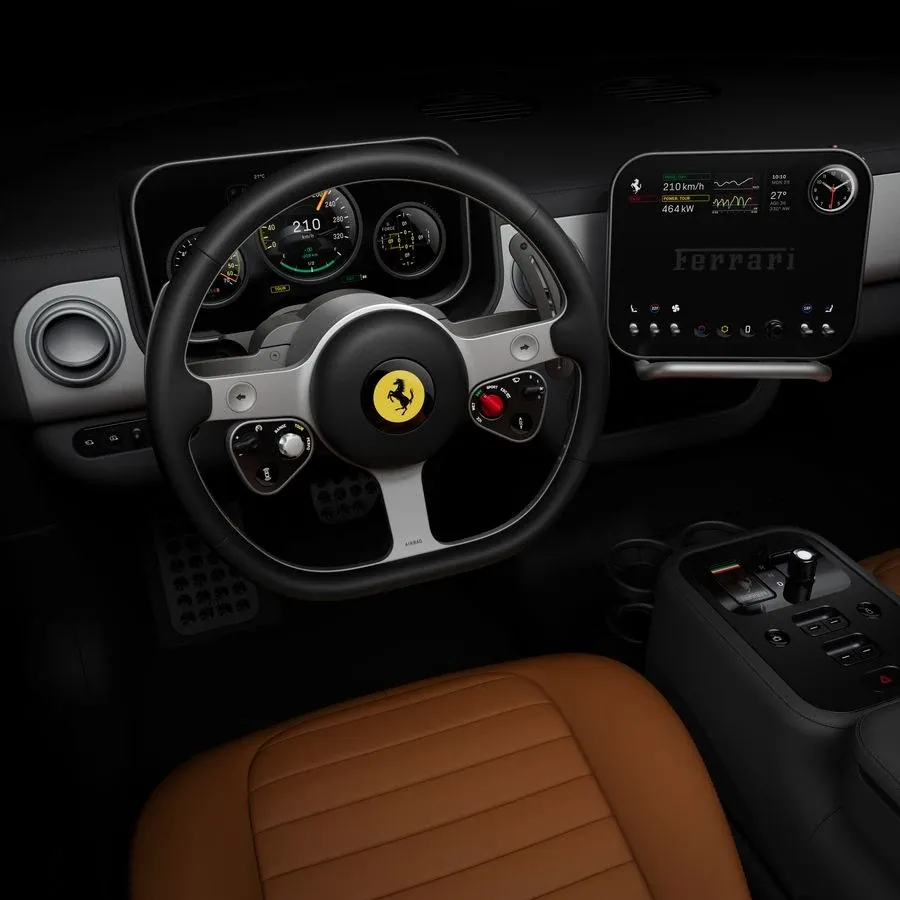
The Steering Wheel: The aluminum structure is intentionally exposed celebrating the material itself, not hiding it under leather.
The Key: Made from Corning Gorilla Glass with an E Ink display. When you dock it in the central console, it transforms from yellow to black as it integrates with the glass surface. The whole cabin lights up in a choreographed sequence.
The Binnacle: Two overlapping OLED displays featuring three large cutouts that reveal a second display behind them. It moves with the steering wheel for optimal visibility. There’s something almost aviation grade about the interface. It’s clean, bright, focused. Like a cockpit designed for performance.
The Multigraph: This might be my favourite detail. The central control panel features a mechanical multigraph with three independent motors that can switch between clock, chronograph, compass, and launch control modes.
What strikes me about the Luce’s interior is how it embodies that classic Jony Ive principle: form shaped by function, not the other way around.
It’s the same design thinking that made iOS feel so intuitive. The same obsession with reducing cognitive load. The same belief that great design should feel invisible.
The material choices are absolutely Ive: Aluminum and glass. Everything is presented in its most authentic form.
The exposed aluminum accents remind me immediately of the iPhone 4 and 5 as well as the metal iMacs from that era with that same commitment to letting materials be themselves. No fake chrome. No plastic pretending to be metal. Just honest materials, celebrating what makes them beautiful.
Why This Matters (Even If We Can’t Afford It)
Look, I’m not buying a Ferrari Luce anytime soon. Chances of me ever sitting in one? Pretty slim. But I have genuine excitement about this collaboration.
What Ive does, (whether it’s an iMac G4, an iPhone, or now a Ferrari) is create designs that feel both futuristic and timeless. The Luce looks clean and simple, but also like something from a sci-fi film. Those metal accent elements, the way everything is organized around clarity and purpose. It’s the same magic that made me curious about that iMac in 2003.
This collaboration matters because it shows what’s possible when you prioritize design thinking over feature list thinking.
Cars don’t have to be dominated by touchscreens. Interiors don’t have to be cluttered with fake materials. The Luce proves that minimalism isn’t about removing everything. It’s about considering everything, then keeping only what matters.
The Intersection of Heritage and Innovation
What Ferrari and LoveFrom have created is a car that doesn’t just look different, it thinks differently about what an electric sports car should be.
It’s tactile in an age of touchscreens. It celebrates craftsmanship and materials in an age of digital interfaces.
But it does all this while remaining Ferrari.
That’s the magic of great design: it doesn’t erase what came before.
All images courtesy of Ferrari S.p.A. Press kit available at ferrari.com/media-centre
Want to learn more? The exterior reveal is coming in May 2026 in Italy.
What do you think of this design? Are you excited to see the full car? Let me know on Twitter @studioVPT.